
Sources and publishing approach
There is no single best sleeping position for sciatica. Side lying with a pillow between the knees and back lying with a pillow under the knees are reasonable comfort options to try. Keep the option that feels tolerable, and change position if leg symptoms increase. Cleveland Clinic's sciatica sleep guidance emphasizes individual response.
Sciatica describes a pattern of nerve-related leg symptoms, not a diagnosis you can confirm from where it hurts. This guide cannot identify the cause of radiating pain. Our sciatica overview explains the broader assessment; MedlinePlus describes sciatica as a symptom of an underlying problem.
Symptoms that take priority over sleep advice
Go to an emergency department now for new difficulty starting urination, inability to urinate, new loss of bladder or bowel control, or numbness around the genitals or anus. Sciatica on both sides, or severe or worsening weakness or numbness in both legs, also needs emergency assessment. These are the NHS emergency warning signs for sciatica. Call 911 if you cannot get there safely; do not drive yourself with significant weakness.
Back pain after a serious accident or major trauma also needs emergency assessment. Seek urgent same-day medical advice for fever with back pain, sudden severe or rapidly worsening pain, or new leg weakness or numbness. NHS back-pain guidance separates emergency and urgent warning signs, and MedlinePlus advises contacting a clinician right away for new neurological symptoms.
Pain that repeatedly wakes you, worsens when lying down, or prevents a comfortable position also merits medical advice. See our broader guide to when back pain is serious.
Try one position and one support change
Start with an ordinary pillow you already own. Note how your leg feels before changing anything, then try one adjustment while awake. There is no requirement to hold a painful position for a set number of minutes. The comparison below is a comfort trial, not a test for a slipped disk or spinal stenosis.
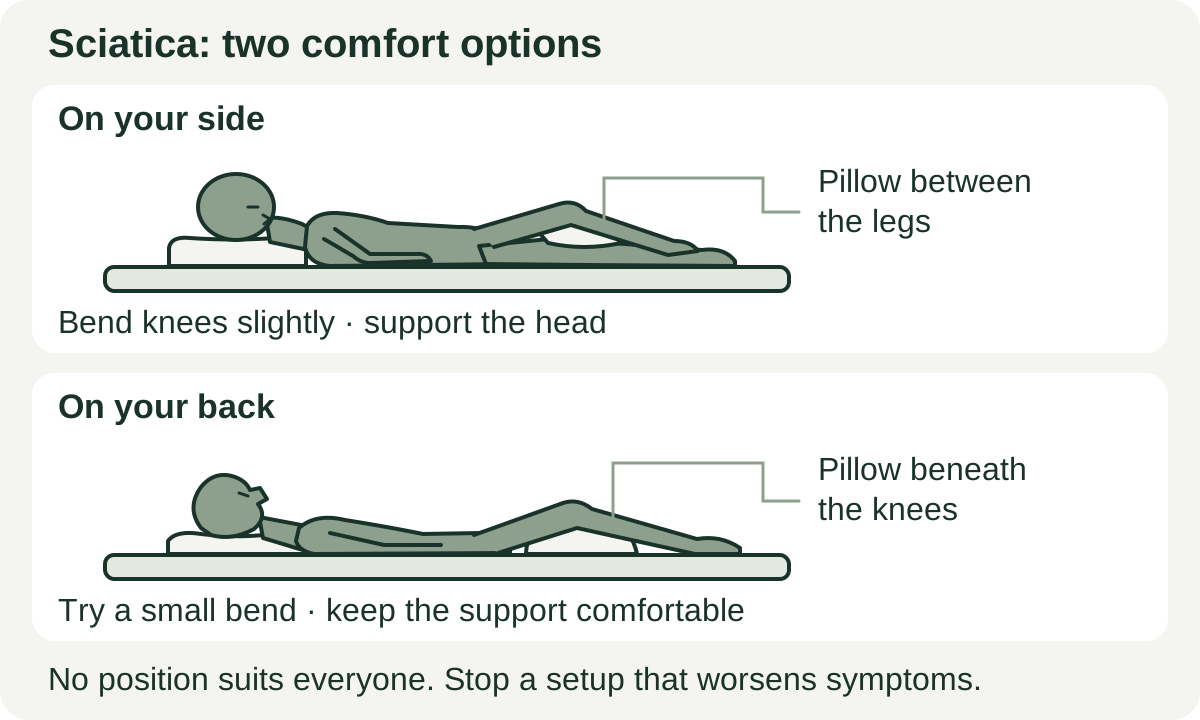
On your side: support the upper leg
Let your knees bend a little and place a pillow between your legs. Keep your head supported too. This setup appears in Mayo Clinic's general back-pain sleep guidance; it is not proof that side sleeping treats sciatica.
Compare left and right while awake and choose the more comfortable option. Support should help you settle without making it difficult to turn. NIAMS also includes side lying with a knee pillow among its back-pain comfort options.
On your back: try support under the knees
Place a pillow beneath the knees and support your head and neck. Adjust the knee pillow if the bend feels excessive or the support is uncomfortable. Mayo Clinic suggests knee support as a way to make back lying more comfortable and keep the lower back's natural curve. This is general positioning guidance, not a promise of nerve decompression. Mayo Clinic: Sleeping positions for back pain.
If neither position settles your symptoms
Change or remove the support instead of forcing a curled position. Different causes of sciatica can respond differently, and even stomach lying is not equally aggravating for everyone. Ask a clinician or physical therapist for individual advice when the usual options fail. Cleveland Clinic explains why positioning advice varies.
Troubleshooting overnight
| What happens | A practical next step | What to record |
|---|---|---|
| A pillow between your knees keeps slipping | Reposition it or try a pillow that stays comfortably between your legs | Did the change affect settling or awakenings? |
| Knee support feels uncomfortable on your back | Reduce or remove it and compare | Which setup was more tolerable? |
| You wake after staying in one position | Change to another tolerable position | Was waking due to pain, another reason, or unclear? |
| Leg pain becomes sharper or spreads during a trial | Stop that trial and return to a tolerable position | Where did the symptoms go? |
| New numbness, weakness, or bladder/bowel symptoms appear | Follow the care guidance above | Do not wait to finish a sleep log |
A better night is useful information, but it cannot establish the diagnosis or show that a nerve has healed. Likewise, one uncomfortable position does not tell you which structure is responsible.
Turning and getting out of bed
You can change position overnight; there is no need to stay perfectly still. If sitting straight up is uncomfortable, try this alternative:
- Roll onto the side that you can tolerate.
- Move your legs over the edge of the bed.
- Use your arms to help bring your upper body upright as your feet lower.
- Pause sitting before standing, especially if you feel unsteady.
To lie down, reverse the sequence: sit near the edge, lower onto your side with arm support, then bring your legs onto the bed. Wirral Community Health's back-pain guidance describes this approach. It is an optional movement strategy, not an instruction to brace rigidly. If you cannot transfer safely, seek help; follow any individual instructions after surgery or injury.
A one-night setup log
Copy these fields into a note or onto paper to discuss with your clinician. Approximate answers are enough; you do not need to wake yourself to make a record.
| Field | Your note |
|---|---|
| Date and starting symptoms | Where was the pain or tingling before bed? |
| Starting position | Left side, right side, back, or another position |
| One change | What pillow or support changed? |
| Response while settling | More comfortable, unchanged, or worse; describe where |
| Awakenings remembered | Approximate number and any reason you noticed |
| Morning symptoms and function | What changed, and how was getting out of bed? |
A fictional entry might say: “Right side; ordinary pillow between knees; easier to settle; woke twice; leg ache unchanged; getting up still difficult.” Include what remained difficult as well as what felt better.
Bring the note to an appointment if sleep remains disrupted. NIAMS explains that clinicians ask about location, timing, aggravating factors, and daily function. Our pain diary guide turns observations into a short appointment summary.
Common questions
Should I stay in bed until sciatica settles?
Prolonged bed rest is not recommended. Keep normal activity as manageable, and seek advice about movements you cannot tolerate. The NHS recommends staying active during sciatica recovery. This does not mean stretching through worsening leg symptoms.
Do I need a special mattress or pillow?
A special purchase is not necessary to try the setups above. Use what you have to learn which support feels comfortable. Persistent sleep disruption deserves assessment before an expensive purchase becomes the entire treatment plan.
What if sleep keeps getting worse?
Contact your clinician rather than continuing experiments indefinitely. Worsening symptoms or interference with usual activities are reasons to seek care, and any emergency signs above take priority. NHS guidance explains when self-care is insufficient.
Sources
Keep Exploring
Pain Guide
Sciatica
Understand sciatica symptoms, gradual activity, comfort measures, and emergency warning signs such as new bladder changes or saddle numbness.
Pain Guide
Back Pain
Understand common back pain symptoms, practical activity changes, treatment options, and the warning signs that need urgent or emergency care.
Remedy
Stretching & Exercises
Learn how to approach movement for pain, build a tolerable starting point, and recognize when an individualized exercise plan or assessment is needed.
Remedy
Heat & Cold Therapy
Use heat and cold packs safely: protect the skin, follow device limits, avoid sleeping with a pack, and know when self-care is not enough.
Related Article
Lower Back Pain When Sitting: Practical Changes to Try
Compare small changes for your desk, car and couch, reassess what helps, and recognize symptoms that need more than a different chair.
Related Article
When Is Back Pain Serious? Warning Signs and Next Steps
Know which back-pain symptoms need emergency care, which need same-day advice, and when to book an appointment for pain that is not improving.