
Sources and publishing approach
To sleep with neck pain, try your usual side or your back with enough pillow support to keep your head comfortably in line with your body. Change one part of the setup at a time. There is no single pillow height or position that works for everyone, and comfort changes do not establish the cause of pain.
This guide helps you adjust a sleep setup. For possible causes and assessment, see our neck pain guide. If you are choosing a replacement, our pillow guide explains what to check before buying.
Check these symptoms before changing pillows
Get emergency help for severe neck pain after a serious fall, collision, or other injury. A stiff neck with fever and a severe headache also needs emergency assessment; call 911 if you cannot travel safely or are severely unwell. Do not force your neck through a movement to test it. These warnings are supported by Mayo Clinic's neck pain guidance and MedlinePlus.
Contact a clinician promptly for new arm or hand weakness, numbness, tingling, trouble walking, or severe pain that prevents a comfortable position. Pain that repeatedly wakes you or worsens when lying down deserves medical advice. A pillow experiment should not postpone that assessment. MedlinePlus explains when neck symptoms need care.
Two supported positions to try
The aim is a position you can settle into without holding your head rigidly. Keep any specific sleeping instructions from your clinician, including those for pregnancy, breathing problems, or recovery after surgery.
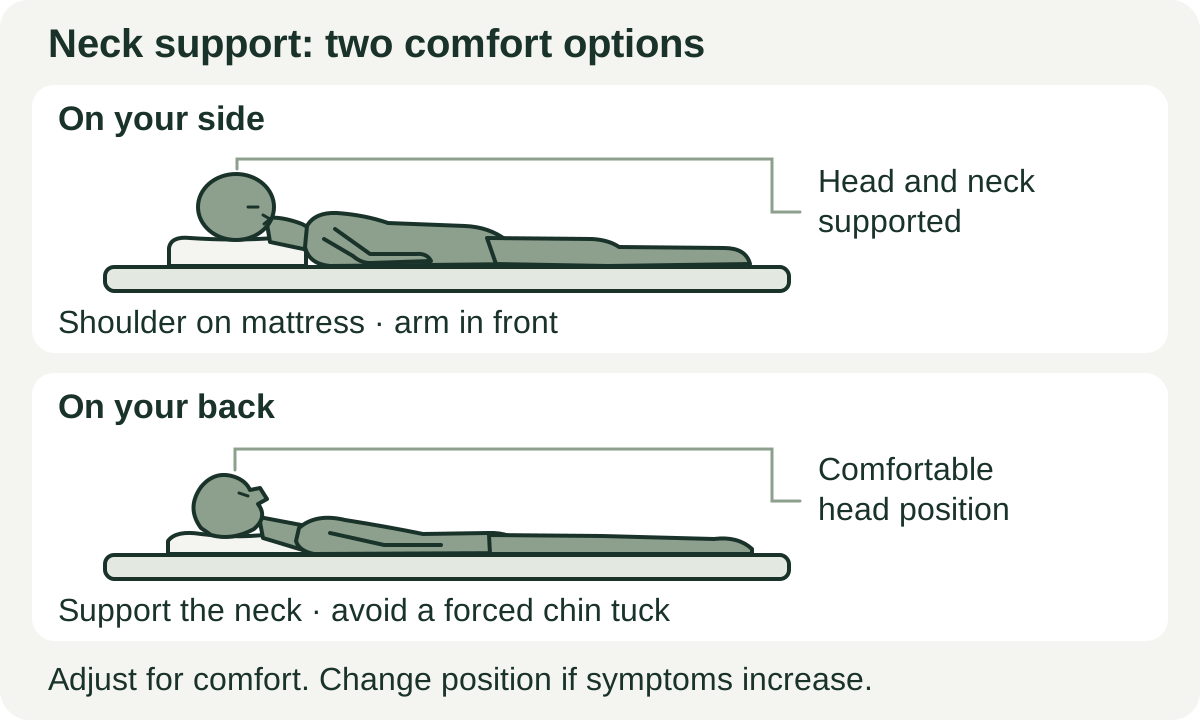
Side sleeping: fill the gap below your head
Lie on whichever side is more comfortable. Place the pillow beneath your head and neck, with your shoulder resting on the mattress. Your head should not tip markedly toward the bed or be pushed upward. Keep the lower arm comfortably in front of your chest rather than trapped beneath you. These checks follow Gloucestershire Hospitals' illustrated neck guidance.
While awake, notice whether you are pulling your chin toward your chest or turning your face into the pillow. Adjust the pillow rather than holding your neck in place with effort. A pillow between your legs is an optional comfort support if the upper leg tends to pull your body forward. Cleveland Clinic describes these side-sleeping adjustments.
Back sleeping: support without a forced chin tuck
Let the pillow support your head and the curve of your neck. If it pushes your chin toward your chest, try less height; if your head tips backward, try more support. The useful check is how your neck rests, not the pillow's advertised thickness. Cleveland Clinic explains how pillow height changes the resting position.
A pillow under the knees is optional if that makes back lying more comfortable. Mayo Clinic includes this in its neck-pain sleep advice. Back sleeping does not have to become your new default if your usual side feels better.
Pillow too high, too low, or shifting?
Use this checklist as a small experiment while awake. It cannot diagnose why your neck hurts. Make one change, then decide whether it is more comfortable before adding another.
| What you notice | One adjustment to try | Recheck |
|---|---|---|
| On your side, your head tilts toward the mattress | Add a little support beneath the head | Is the tilt reduced without pushing the head up? |
| On your side, your head is pushed upward | Reduce pillow height | Can your neck rest without bending sideways? |
| On your back, your chin feels crowded toward your chest | Remove a stacked pillow or reduce fill | Does your head settle more comfortably? |
| Your head slips off the supported area | Reposition the pillow before settling | Is the support still beneath your head and neck? |
| Tingling or weakness appears | Stop the setup trial | Seek medical advice rather than adding more pillows |
The alignment checks reflect the NHS neck-pain advice and the positioning sources above. There is no universal measurement in inches: pillow compression, body shape, and how far the shoulder sinks into the mattress change the fit.
If you usually sleep on your stomach
Face-down sleeping keeps the head turned and may aggravate neck symptoms. Try settling on your side or back if that feels better; the NHS advises avoiding front sleeping and twisting the neck in bed.
Changing a habit can be awkward. Start by setting up a comfortable alternative at bedtime without trying to control every movement overnight. If you wake in another position, simply reassess comfort. It is normal to change position during sleep.
When you wake with neck pain
Before buying a replacement pillow, write down three observations: the position you remember waking in, whether the pillow had moved, and what felt different from bedtime. Also note long periods at a desk or other activities that preceded the bad night. Neck pain has several possible causes, including injury, joint disease, and nerve problems; morning timing alone does not identify one. Johns Hopkins outlines those causes.
For an optional comfort measure, review our heat and cold precautions. Remove heat or ice before sleep; MedlinePlus warns against sleeping with a heating pad or ice bag.
If pain is intense, spreading into an arm, or not improving after a few days, contact your clinician. Mayo Clinic recommends assessment for these patterns. Bring your observations using our pain diary and appointment summary.
Common questions
Can I sleep on the painful side?
There is no rule that everyone must avoid it. Compare comfort without forcing the position. If that side worsens symptoms, use another option; new arm symptoms need the assessment described above.
How do I know whether my pillow is too high?
Look for your head being pushed upward when side lying or your chin being crowded toward your chest on your back. Reduce height a little and reassess while awake. A label such as orthopedic does not tell you whether the fit is right.
Does morning pain mean my pillow caused it?
No. A sleep setup can be one contributor, but the timing does not diagnose the cause. Recurrent waking pain, worsening symptoms, or difficulty functioning are reasons to seek care rather than repeatedly replacing bedding.
Sources
Keep Exploring
Pain Guide
Neck Pain
Explore practical neck pain care, pillow support, activity changes, and when arm symptoms, an injury, or a severe headache need medical attention.
Remedy
Stretching & Exercises
Learn how to approach movement for pain, build a tolerable starting point, and recognize when an individualized exercise plan or assessment is needed.
Remedy
Heat & Cold Therapy
Use heat and cold packs safely: protect the skin, follow device limits, avoid sleeping with a pack, and know when self-care is not enough.
Related Article
Choosing a Pillow for Neck Pain: Height, Shape and Fit
The best pillow for neck pain depends on how you sleep. Height, shoulder width, firmness, and whether you sleep on your back or side matter more than labels.
Related Article
Pain Worse at Night: Sleep Adjustments and Warning Signs
Position and stillness can affect nighttime comfort, but persistent, worsening or unexplained pain deserves assessment. Learn what to record and when to seek help.